Menu


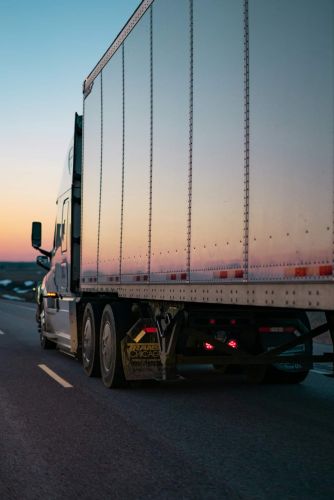
Car accidents can happen at any time. Some involve just two drivers and two vehicles - the most familiar scenario when people think about insurance claims. Others involve pedestrians, cyclists, driverless vehicles, commercial trucks, or 18-wheelers. All are serious. None is simple. But some are significantly more complex than others.
Case in point: trucking accidents.
Collisions involving commercial trucks such as 18-wheelers, delivery vehicles, and freight carriers are often far more complicated than standard car crashes. From the size and force of the impact to the number of potentially responsible parties and layers of insurance coverage, these cases require a deeper level of investigation and strategy from the very beginning.
Here’s what to know: Trucking accident cases in Texas are significantly more complex than typical car crashes because they often involve multiple responsible parties, federal safety regulations, and highly technical evidence that must be preserved quickly. Moreover, fault can be shared under Texas comparative negligence rules, and injuries are frequently severe. Because of these factors, early investigation and legal guidance are often critical to building a strong claim.
One of the main reasons trucking accidents become more complex is the number of parties involved.
In a typical car accident, liability usually comes down to one or two drivers. In a trucking accident, responsibility can extend far beyond the person behind the wheel.
Potentially responsible parties may include:
In many cases, the trucking company can also be held responsible for the driver’s actions if the driver was working at the time of the crash. That adds another layer of legal and insurance complexity right away.
Commercial trucking is heavily regulated, and those rules often become key evidence in a claim. Drivers and companies must follow safety requirements related to how long a driver can be on the road without rest, vehicle inspection and maintenance, proper cargo loading and weight limits, as well as driver training and qualifications.
These rules are enforced at the federal level, and violations can help establish negligence. In other words, if a company or driver failed to follow required safety standards, that failure can directly support an injury claim.
Texas follows a comparative fault system, which means more than one party can share responsibility for an accident. Comparative negligence is governed by the Texas Civil Practice & Remedies Code, Chapter 33. In plain terms, it states that:
If multiple drivers (or companies) contributed to the crash, fault may be divided among them.
In trucking cases, it’s common to see different parties pointing fingers at each other. Sorting out who is responsible and to what extent takes careful investigation.
Evidence in trucking accidents is often more technical and time-sensitive than what you see in a typical car crash. This can include:
The challenge is that some of this evidence can be lost or overwritten if it isn’t preserved quickly.
Because of their size and weight, commercial trucks can cause more severe damage in a collision. Injuries are often more serious and may include traumatic brain injuries, spinal cord injuries, multiple fractures, and long-term or permanent disability.
These cases often involve not just current medical bills, but future care, lost earning capacity, and long-term life impacts - all of which must be carefully evaluated as part of the case.
In Texas, most personal injury claims must be filed within two years of the accident. That’s per Texas Civil Practice & Remedies Code § 16.003. But in trucking cases, waiting even a few weeks can make it harder to gather critical evidence and build a strong claim.
Early action in the first 24 hours helps preserve information, protect your rights, and ensure that nothing important is lost.
Trucking accidents can feel overwhelming, especially when you’re dealing with serious injuries and multiple layers of responsibility. At McKinney Vos PLLC, we help injured Texans investigate complex trucking accident claims, identify all responsible parties, and pursue the compensation they deserve. If you or a loved one has been involved in a trucking accident, contact us today to schedule a free consultation.
Q: How is a trucking accident case different from a regular car accident claim in Texas?
A: Trucking accidents typically involve more potentially liable parties, including the truck driver, the trucking company, maintenance contractors, cargo loaders, and parts manufacturers. These cases are also governed by federal safety regulations, and key evidence such as electronic logging data and black box records must be preserved quickly. The complexity generally requires early legal involvement and a deeper level of investigation than a standard two-vehicle crash.
Q: Who can be held liable in a Texas trucking accident?
A: Liability in a Texas trucking accident can extend to the truck driver, the trucking company that employed or contracted the driver, third-party maintenance providers, cargo loading companies, and manufacturers of defective equipment. In many cases, the trucking company bears responsibility for the driver's actions if the driver was working at the time of the crash, under a legal principle known as respondeat superior.
Q: What federal regulations apply to commercial trucks in Texas?
A: Commercial truck drivers and carriers operating in Texas must comply with Federal Motor Carrier Safety Administration (FMCSA) regulations. These cover hours-of-service limits that restrict how long a driver can operate without rest, vehicle inspection and maintenance requirements, cargo weight and loading rules, and driver qualification and training standards. Violations of these rules can serve as evidence of negligence in a personal injury claim.
Q: How does Texas comparative fault law affect a trucking accident claim?
A: Texas follows a modified comparative fault rule under Chapter 33 of the Texas Civil Practice and Remedies Code. If multiple parties share responsibility for the accident, fault is divided among them. A claimant can still recover damages if they are 50 percent or less at fault, but their recovery is reduced by their percentage of responsibility. If they are more than 50 percent responsible, they cannot recover.
Q: How long do I have to file a trucking accident lawsuit in Texas?
A: The general statute of limitations for personal injury claims in Texas is two years from the date of the accident, under Texas Civil Practice and Remedies Code Section 16.003. In trucking cases, however, waiting even a few weeks can make it harder to secure critical evidence like electronic logs and maintenance records. Contacting an attorney promptly after the crash gives your case the strongest possible foundation.
---
Jessica McKinney is a personal injury attorney and co-founder of McKinney Vos PLLC in Austin, Texas. She has resolved over 1,000 cases across Central Texas, handling car accidents, truck crashes, DWI collisions, motorcycle accidents, dog attacks, slip and fall cases, and wrongful death claims.

© 2026 McKinney Vos PLLC
Legal Disclaimer | Privacy Policy
Law Firm Website Design by The Modern Firm